
Shopping Cart
- (+92) 323 4911777
- info@najeebr.com
- Lahore, Punjab, Pakistan.
© 2025 NajeebR. DESIGNED BY RehmanSoft.
The Blog
Key Differences Between Essential Oil and Natural Perfume
You walk into a boutique aromatherapy store. To your left, rows of amber glass bottles labelled “Lavender Essential Oil.” To your right, elegant vials of “Botanical Natural Perfume.” Both claim to be natural, derived from plants, and good for your well-being. But what’s the difference? Aren’t they the same thing, bottled with a different label?
Well, not quite.
Essential oils and natural perfumes may share a base in nature, but they diverge in purpose, composition, concentration, and the experience they provide. In this blog, we’ll clear the air and explore the real differences between these two fragrant products, helping you make the right choice for your mood, body, and lifestyle.
What Are Essential Oils?
Let’s begin with the basics. Essential oils are highly concentrated plant extracts obtained through the process of distillation or cold pressing. They capture the “essence” of a plant, its scent, and beneficial compounds.
Key Characteristics of Essential Oils:
- 100% Pure Plant Extract: No additives, no dilutions.
- Used in Aromatherapy: To influence mood, energy, or health.
- Highly Potent: Often requires dilution before use on skin.
- Single-Note or Limited Blends: Often sold individually (e.g., eucalyptus, tea tree).
Essential oils are powerful. Just a few drops of peppermint oil can make your room smell like a candy cane factory, and just a touch of clove oil can numb a toothache. But with great power comes great responsibility; these oils are not to be used like regular fragrances.
What Is Natural Perfume?
Natural perfumes are fragrance products made entirely from natural ingredients, such as essential oils, absolutes, resins, and botanical tinctures, often diluted in a carrier like jojoba oil or alcohol. Unlike synthetic perfumes, they contain no artificial chemicals or synthetic fixatives.
Key Characteristics of Natural Perfumes:
- Blended for Aroma: Focused on olfactory pleasure.
- Composed of Multiple Notes: Top, middle, and base notes create a harmonious scent journey.
- Gentler on the Skin: Diluted and designed for safe application.
- Wearable Fragrance: Created to be worn and enjoyed as a personal scent.
Natural perfumes are essentially the botanical cousin of conventional perfumes, crafted thoughtfully, worn delicately, and fading naturally over time.
1. Composition: Simplicity vs Symphony
Essential Oils: Nature in its Rawest Form
Each essential oil is derived from a single botanical source. Lavender oil? Distilled from lavender flowers. Lemon oil? Cold-pressed from lemon peel. That’s it, nothing more.
This purity means they carry the most unadulterated form of the plant’s properties, including its aroma, volatile compounds, and chemical constituents, which can interact with the body and mind.
However, the simplicity of essential oils also means they are not designed for complex or balanced scents.
Natural Perfume: A Botanical Orchestra
Natural perfumes are multi-ingredient creations, crafted by layering various aromatic materials from different plants.
- Top Notes (e.g., citrus): What you smell first. Fresh but fleeting.
- Middle Notes (e.g., florals): The heart of the perfume.
- Base Notes (e.g., woods, resins): The scent that lingers longest.
Natural perfumers are like composers, blending botanical elements into a symphony for the nose. The goal isn’t healing; it’s beauty.
2. Purpose: Therapy vs Luxury
Essential Oils: A Tool for Wellness
Essential oils are part of aromatherapy, a holistic healing treatment that uses natural plant extracts to promote health and well-being. Their benefits can include:
- Reducing stress and anxiety (lavender, frankincense)
- Boosting energy and focus (peppermint, lemon)
- Improving sleep (chamomile, sandalwood)
- Alleviating nausea or headaches (ginger, peppermint)
Because of their therapeutic intent, essential oils are often used in:
- Diffusers
- Massage oils
- Baths
- Inhalers
- Skincare (in diluted form)
Natural Perfumes: A Personal Signature
While they may incidentally uplift your mood, natural perfumes are not created for therapeutic outcomes. They’re crafted to:
- Make you feel elegant, grounded, or joyful
- Enhance personal identity
- Evoke memories or moods
- Offer a clean, non-toxic alternative to commercial perfumes
Natural perfumes celebrate olfactory art rather than clinical effects.
3. Application & Usage: Dilution Matters
Essential Oils: Handle With Care
Due to their potency, essential oils must be diluted before being applied to the skin. Direct application can cause:
- Skin irritation or burns
- Sensitisation over time
- Phototoxic reactions (especially with citrus oils)
They are also not meant to be worn for scent alone; they are used sparingly, with intention.
Typical usage includes:
- Diffusing in air (via essential oil diffuser)
- Adding to carrier oils for massage
- A few drops in the bath water
- Steam inhalation
Natural Perfumes: Ready to Wear
Natural perfumes are formulated for direct skin application, often diluted in a base of alcohol or oil, such as jojoba or coconut oil. They are designed to:
- Evolve on your skin over time
- Leave a soft scent trail (sillage)
- Fade naturally without harsh chemicals
While they can also uplift mood, they are primarily about experiencing fragrance in a natural, non-invasive way.
4. Longevity: Fleeting vs Fixative-Free
Essential Oils: Fast to Fade
Because essential oils are volatile, they evaporate quickly. When applied to the skin or used in a diffuser, the scent may last from a few minutes to a few hours, depending on the oil.
Natural Perfumes: Naturally Layered, Naturally Fleeting
Natural perfumes often last longer than single essential oils but not as long as synthetic perfumes. The absence of artificial fixatives means the scent evolves and fades within a few hours.
Some wearers find this refreshing and authentic, a scent that lives and breathes with you, rather than clinging artificially.
5. Safety and Sensitivity
Essential Oils: Too Much of a Good Thing?
While natural, essential oils can be toxic if misused. Overuse, ingestion, or undiluted application can result in:
- Allergic reactions
- Respiratory issues
- Hormonal disruptions (in rare cases)
They are especially risky for:
- Children
- Pregnant or nursing women
- Pets
Natural Perfumes: Skin-Friendly Formulas
Natural perfumes are generally safer for regular use, as they are:
- Diluted to skin-safe concentrations
- Free from petrochemicals and synthetic additives
- Often blended with nourishing oils
However, if you have sensitive skin or known allergies, always patch-test before using it full-time.
6. Cost: Investment in Wellness or Fragrance?
Essential Oils: Price Reflects Plant & Purity
Essential oils can be expensive, especially rarer oils like rose, neroli, or sandalwood. This is because:
- Huge quantities of plant material are required
- The extraction process is complex
- Purity is critical for therapeutic use
For example, it takes 10,000 pounds of rose petals to produce just one pound of rose oil.
Natural Perfumes: Artisan Craft, Higher Cost
Natural perfumes often cost more than mainstream scents because they are:
- Handmade in small batches
- Made with premium, ethically sourced botanicals
- Free from cheap synthetic fillers
You’re paying for artistry, sustainability, and skin-loving ingredients, not just branding.
7. Packaging and Presentation
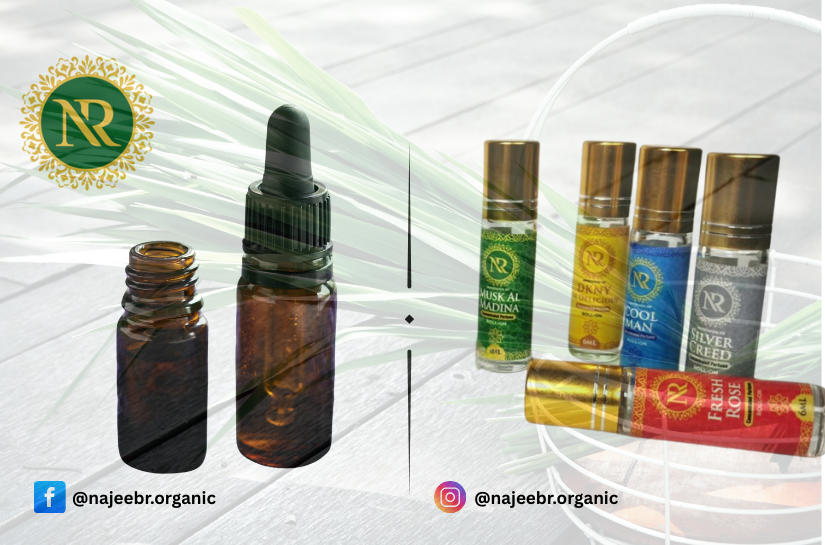
Essential oils come in minimal, functional bottles, usually amber glass to protect against UV damage. Labels include Latin plant names, extraction method, and origin.
Natural perfumes, however, are often presented in aesthetically pleasing packaging, reflecting their luxurious and wearable nature, sometimes with a narrative behind each scent.
Best Essential Oils From NajeebR
Here are ten of the standout essential oils you can find in NajeebR’s range, each chosen for its purity and targeted benefits:
- Aloe Vera Oil
Renowned for its soothing, moisturizing, and healing properties, aloe vera oil helps calm inflammation, accelerate burn recovery, and deeply hydrate both skin and hair.
- Argan Oil
Often called “liquid gold of Morocco,” argan oil is rich in fatty acids and antioxidants, used to nourish dry skin, tame frizz, and restore shine to hair.
- Batana Oil
Also known as Ojon oil, this antioxidant‑packed extract from the American palm tree is prized for deeply conditioning hair and rejuvenating skin, earning its reputation as a “miracle oil” among the Miskito people.
- Bitter Almond Oil
A potent essential oil, nearly pure benzaldehyde, bitter almond oil delivers a warm, nutty aroma and is used in perfumery and flavoring. However, it must be handled with care due to its inherent toxicity.
- Blackseed Oil
Extracted from Nigella sativa, black seed oil offers anti-inflammatory and antioxidant benefits that may support skin health, soothe scalp irritation, and contribute to overall wellness.
- Blue Orchid Oil
Blue Orchid oil is a niche floral oil celebrated for its unique, exotic bouquet and skin‑softening properties, perfect for adding a delicate, botanical note to your skincare routine.
- Castor Oil
High in ricinoleic acid, castor oil is valued for its deeply moisturizing and anti-inflammatory effects, and is often used to strengthen lashes, promote hair thickness, and soothe dry skin.
- Jojoba Oil
A liquid wax ester that closely mimics human sebum, jojoba oil balances oily or dry skin, enhances hair resilience, and offers long‑lasting stability in cosmetic formulations.
- Rosemary Mint Oil with Biotin
Rosemary Mint Oil with Biotin is formulated to invigorate the scalp, this blend combines stimulating rosemary, refreshing mint, and hair‑strengthening biotin for fuller, healthier hair.
- Pumpkin Seed Oil
Rich in polyunsaturated fatty acids and phytosterols, pumpkin seed oil supports skin elasticity and may help fortify hair follicles, making it a versatile choice for both beauty and nutrition.
Best Natural Perfumes From NajeebR
Here are six standout natural perfume oils you can explore on Najeebr’s Perfume Oils page, each crafted from botanical extracts, free of synthetic chemicals, and perfect for everyday wear:
- Amber
A warm, suave accord rooted in traditional amber blends, amber gives off a sensual, powdery‑sweet warmth, often built from labdanum, vanilla, and benzoin. - Ameer Al Oudh
Ameer Al Oudh is a unisex attar combining agarwood (oud), rose, and spice top notes, with a heart of cinnamon and amber, and a rich base of sandalwood and oud for an opulent, long‑lasting aroma. - Attar e Kaaba
Inspired by sacred traditions, Attar e Kaaba opens with saffron, bergamot, ylang‑ylang, orange, apricot, and lemon, flowing into a heart of oud and sandalwood, and resting on amber and Taif rose for a deep, spiritual scent experience. - Attar Kulsoom
A floral “bakhoor” attar with top notes of rose, hyacinth, green accord, peach, and pepper, transitioning to a heart of rose, orange blossom, and galbanum, a feminine, long‑lasting attar style. - Delicia
A modern woody‑gourmand that hugs you with velvet plum and sugared violet, blooms into vanilla orchid and whipped amber, then settles on sheer sandalwood and fresh vetiver, cozy yet sophisticated. - Omber Nomade
NajeebR’s take on a contemporary oriental‑woody scent: initial raspberry and frankincense, a heart of benzoin and agarwood, and a base of agarwood for a smoky, resinous trail.
Which One Do You Need?
Still unsure which to go for? Here’s a quick cheat sheet:
| Purpose | Choose Essential Oil If… | Choose Natural Perfume If… |
| Intent | You want health or mood benefits | You want to smell amazing naturally |
| Usage | You use diffusers, massage oils, and baths | You want a wearable fragrance |
| Complexity | You prefer single-note plant aromas | You enjoy layered, evolving scents |
| Sensitivity | You’re willing to dilute & patch-test | You want a ready-to-wear formula |
| Budget | You want potent therapeutic value | You value artistry and luxury |
Follow Your Nose, Not the Hype
In the ever-expanding world of wellness and natural beauty, it’s easy to get swept away by labels. But when you understand the fundamental difference between essential oils and natural perfumes, you empower yourself to make conscious, safe, and soul-satisfying choices.
Let your scent story begin with clarity, with confidence, and with nature in every note.
Tag:
Share
Share on facebook
Share on twitter
Share on linkedin
Categories
Popular Post
October 27, 2025
October 24, 2025
October 17, 2025
Instagram


Tags

© 2025 NajeebR. DESIGNED BY RehmanSoft.


© 2022 Enzian. DESIGNED BY LA-STUDIO